🇮🇳 India
India tourist visas resumed for Bangladeshis from June 28, 2026. Darjeeling, Kolkata, Agra, Sikkim & more IVAC process, costs & group tours from ৳12,000. Tripzic guide.
For Bangladeshis, India has always been more than a foreign country. It is the land of Kolkata's Bengali culture and bookshops, the cool tea hills of Darjeeling visible on a clear day from parts of northern Bangladesh, the spiritual weight of Varanasi's ghats, the Mughal grandeur of the Taj Mahal, and family connections that cross the border in both directions. The reopening of tourist visas is not just a travel update for millions of Bangladeshi families, it is the reopening of a relationship.
India Travel Guide
Everything you need to plan your trip
The Visa Situation: What Changed on June 28, 2026
This is the single most important section on this page, and it requires care — the situation has changed multiple times in the past two years and will likely continue to evolve. Always verify current status at ivacbd.com before finalising travel plans.
Timeline — How We Got Here:
After the political transition in Bangladesh in August 2024, the Indira Gandhi Cultural Centre in Dhaka was ransacked and set on fire, and several Indian Visa Application Centres across Bangladesh came under attack, with Indian personnel threatened. Citing security concerns, the High Commission of India scaled down visa operations significantly — though medical and emergency visas continued to be processed throughout on humanitarian grounds, given how many Bangladeshi patients depend on treatment in Indian hospitals.
Limited tourist visa appointments were briefly reintroduced for urgent cases in 2025, but normal tourist visa issuance remained suspended. The IVAC centre in Chittagong was further suspended in December 2025 following a security incident near the Assistant High Commission of India, and the Bangladesh High Commission in New Delhi briefly suspended its own consular services in response.
Through early 2026, diplomatic engagement between the two countries gradually increased — Bangladesh's Foreign Minister Khalilur Rahman visited India in April 2026, and multiple bilateral mechanisms were activated to stabilise the relationship.
The breakthrough came on June 28, 2026: newly arrived Indian High Commissioner Dinesh Trivedi announced at the IVAC Dhaka centre that normal tourist visa applications would resume from that Sunday, with visas issued through five centres: Dhaka, Rajshahi, Chittagong, Sylhet, and Khulna, with further cities expected to follow.
What This Means for You, Practically:
- ✅ Tourist visa applications can now be submitted through IVAC centres in Dhaka, Rajshahi, Chittagong, Sylhet, and Khulna
- ✅ No visa fee from the Indian government — this has never changed; India does not charge Bangladeshi nationals a government visa fee under the bilateral agreement
- ✅ IVAC service charge applies — BDT 1,500 (all-inclusive), revised from the previous lower rate as of August 2025
- ⚠️ Expect a backlog — after nearly two years of suspension, demand is extremely high. Apply as early as possible and expect longer processing times than the official estimates during the initial reopening weeks
- ⚠️ Coverage is currently limited to five cities — if you are not near Dhaka, Rajshahi, Chittagong, Sylhet, or Khulna, plan for travel to the nearest centre
- ⚠️ Medical and emergency visas remain prioritised — if your trip is for medical treatment, this category has continued processing throughout the suspension and remains the fastest-moving
Visa Categories and What They Cover:
India does not offer an eVisa to Bangladeshi citizens — every applicant must apply for a physical sticker visa through IVAC. Categories typically issued:
- Single-entry tourist visa — valid 30 to 90 days from date of issue, most common for first-time applicants
- Multiple-entry tourist visa — valid up to 1 year (5 years for applicants aged 65+), with each continuous stay capped at 90 days
- Group tourist visa — issued to organised groups of 4 or more travelling together through a registered Indian tour operator; all members must enter and exit India together
- Business visa — for commercial purposes, separate documentation required
- Medical visa — for treatment at Indian hospitals, fastest processing during normal operations and prioritised even during suspensions
Required Documents (Tourist Visa):
- 1. Valid Bangladesh passport — minimum 6 months validity, at least 2 blank pages, in good condition
- 2. Old passport (if you have previous Indian visas) submit alongside your current passport
- 3. Completed online application form (submitted via the IVAC portal before your appointment)
- 4. 2 recent colour photographs 2×2 inch (or as currently specified — verify exact spec on the IVAC portal, as requirements can be revised)
- 5. Bank statement last 3 to 6 months, showing adequate funds for your trip
- 6. Confirmed or tentative return flight/transport booking
- 7. Hotel booking confirmation or a host/invitation letter if staying with family or friends in India
- 8. Employment proof (NOC, salary certificate) for working applicants
- 9. Cover letter stating purpose and itinerary of visit
Important sensitive border regions: If your itinerary includes parts of Arunachal Pradesh, Sikkim's restricted zones, the Andaman Islands, or Ladakh, you will need a separate Protected Area Permit (PAP) or Inner Line Permit (ILP) in addition to your standard tourist visa. Apply for these once in India or in advance through your tour operator — Tripzic group trips to these regions include permit handling.
How to Apply — Step by Step:
1. Visit ivacbd.com and complete the online visa application form 2. Book an appointment slot at your nearest IVAC centre (Dhaka, Rajshahi, Chittagong, Sylhet, or Khulna) — slots are in extremely high demand following the reopening; check frequently 3. Pay the IVAC service charge (BDT 1,500, all-inclusive) — no government visa fee applies 4. Attend your appointment with all original documents and photocopies 5. Biometric data collection may be required for some applicants 6. Track your application status using your Application ID at ivacbd.com 7. Collect your passport with the visa sticker once processing is complete
Processing time: Historically 4–7 working days for tourist visas once IVAC accepts the submission — but expect this to be longer in the weeks immediately following the June 28, 2026 reopening due to backlog demand. Apply as far in advance as your travel plans allow.
A Word of Caution:
The High Commission of India has explicitly warned that no one from the High Commission or its Assistant High Commissions ever contacts applicants by phone, social media, or third parties to offer appointment slots in exchange for payment. Beyond the BDT 1,500 IVAC service charge, no additional payment is required to obtain or expedite an appointment. Any such demand is fraudulent — report suspicious communication directly to the numbers listed on ivacbd.com. Given the high demand expected after the reopening, scam activity offering "guaranteed fast-track appointments" is likely to increase — be cautious of any agent or individual promising to bypass the normal IVAC queue for a fee.
Getting There from Bangladesh
India shares a land border with Bangladesh on three sides, which makes it uniquely accessible compared to every other international destination available to Bangladeshi travellers.
By Flight
Kolkata is the closest major Indian city to Dhaka — direct flights take approximately 45 minutes to 1 hour. Biman Bangladesh, IndiGo, SpiceJet, and Air India Express operate this route. Return fares: ৳8,000–18,000 depending on advance booking. From Kolkata, onward domestic flights connect to Delhi, Mumbai, Bagdogra (for Darjeeling/Sikkim), and most other Indian cities.
For Delhi directly: Biman Bangladesh and IndiGo operate direct Dhaka–Delhi flights, approximately 2.5 hours, ৳15,000–28,000 return.
By Land Border (Most Affordable, Most Distinctly Bangladeshi Experience)
India shares land border crossings with Bangladesh at multiple points, and travelling overland is a popular, affordable option provided your visa permits land entry at the specific authorised Integrated Check Post (ICP) you intend to use.
Benapole–Petrapole (West Bengal) the most popular land crossing. From Dhaka, take a bus to Benapole (approximately 4–5 hours, ৳400–600), clear Bangladesh immigration and customs, cross to the Indian side at Petrapole, clear Indian immigration, then continue by bus or taxi to Kolkata (approximately 2.5–3 hours further). The Maitree Express and Bandhan Express trains also run directly between Dhaka and Kolkata, crossing this same border a more comfortable option that avoids the immigration walk-through, with fares around ৳1,500–4,500 depending on class.
Akhaura–Agartala (Tripura) — for Sylhet-region travellers or those heading to India's northeast. Closer for travellers based in Sylhet or eastern Bangladesh, connecting into Tripura and onward toward Assam and Meghalaya.
Tamabil–Dawki (Meghalaya) — for those continuing into Meghalaya. A scenic crossing near Sylhet that connects directly into the Khasi hills — relevant for travellers combining a Sylhet trip with a Meghalaya extension, subject to visa permission for that route.
Always ensure your visa specifically permits land entry and lists the authorised ICP you plan to use — Indian immigration enforces this strictly, and arriving at an unlisted crossing point can result in being turned back.
Getting around India:
India's domestic transport network is vast and well-developed. Domestic flights (IndiGo, SpiceJet, Air India, Akasa Air) connect all major cities cheaply and frequently. India's rail network — the IRCTC system — is extensive; book well in advance for popular routes, especially overnight trains to Rajasthan or the hill stations. App-based cabs (Uber, Ola) operate in all major cities. For hill destinations like Darjeeling and Sikkim, shared jeeps and hired vehicles from Bagdogra or New Jalpaiguri (NJP) are the standard onward connection.
Best Time to Visit
India is vast enough that "best time" depends entirely on which region you're visiting — a single calendar answer would be misleading.
October to March — The Golden Window for Most of India
Cool, dry weather across the Gangetic plains (Delhi, Agra, Varanasi), Rajasthan, and most of central and southern India. This is peak season for the Golden Triangle (Delhi–Agra–Jaipur), Kolkata, and the classic first-time India circuit. Book accommodation and trains in advance for December–January, the busiest period.
April to June — For the Himalayas and Hill Stations
While the plains become punishingly hot (Delhi and Agra can reach 42–48°C in May–June not recommended for first-time visitors unfamiliar with the heat), this is when Darjeeling, Sikkim, and the Himalayan hill stations come alive. Spring blooms rhododendrons and orchids — peak in Sikkim and Darjeeling during April–May. Mountain regions stay comfortably cool while the plains bake.
June to September — Monsoon
Heavy rain across most of India, but this is genuinely the best season for Kerala's backwaters, Meghalaya's waterfalls and living root bridges, and mountain greenery generally often at 30–40% lower accommodation costs than peak season. Avoid the Gangetic plains and Rajasthan during peak monsoon months unless you have specific reasons to visit.
For a Bangladeshi traveller's first trip: October to March remains the most practical recommendation — it covers Kolkata, the Golden Triangle, and gives a comfortable introduction without battling extreme heat or monsoon disruption.
Top Places to Visit (Bangladesh-Accessible Priority)
This section is ordered by proximity and ease of access from Bangladesh not by general international tourism popularity. Kolkata and the eastern Himalayas should be a Bangladeshi traveller's natural first destinations.
Kolkata — The Closest Major Indian City, and the Most Bengali
Kolkata is, in many ways, the most culturally familiar major city in India for a Bangladeshi visitor — shared language, shared Bengali literary and culinary heritage, and a 45-minute flight from Dhaka. Key sites: the Victoria Memorial (a vast white marble monument to British colonial history, now a museum), College Street (Asia's largest second-hand book market, a paradise for readers), Howrah Bridge and the Hooghly riverfront, Kalighat Kali Temple, Park Street's restaurants and colonial-era architecture, and the Indian Museum (the oldest and largest museum in India). Kolkata's food scene — kathi rolls, mishti doi, and Bengali sweets from century-old shops like Balaram Mullick — will feel both familiar and distinctly different from Bangladeshi Bengali cuisine. If your trip coincides with Durga Puja (typically September–October), Kolkata transforms into one of the most spectacular festival cities on earth — pandals (temporary temple structures) of extraordinary artistic ambition appear across the city.
Darjeeling — The Queen of Hills
Darjeeling sits at 6,710 feet in the Himalayan foothills of West Bengal, reachable via a flight to Bagdogra (from Kolkata or directly, where available) followed by a 75 km drive. The Darjeeling Himalayan Railway — the famous "Toy Train" — is a UNESCO World Heritage Site and one of the most charming rail journeys in Asia, climbing through tea estates and mountain villages on a narrow-gauge track first built in 1881. Tiger Hill is the essential sunrise destination — on a clear morning, you watch dawn light strike Kanchenjunga, the world's third-highest peak, while the rest of the Himalayan range emerges from darkness. The Happy Valley Tea Estate (operating since 1854) offers tours and tastings. The Himalayan Mountaineering Institute commemorates Tenzing Norgay and the history of Everest expeditions. November offers the most comfortable weather, clearest skies, and the best Kanchenjunga views; April brings flowering rhododendrons. For Bangladeshi travellers, Darjeeling represents one of the most accessible genuine Himalayan experiences available anywhere.
Sikkim — Monasteries and Mountain Lakes
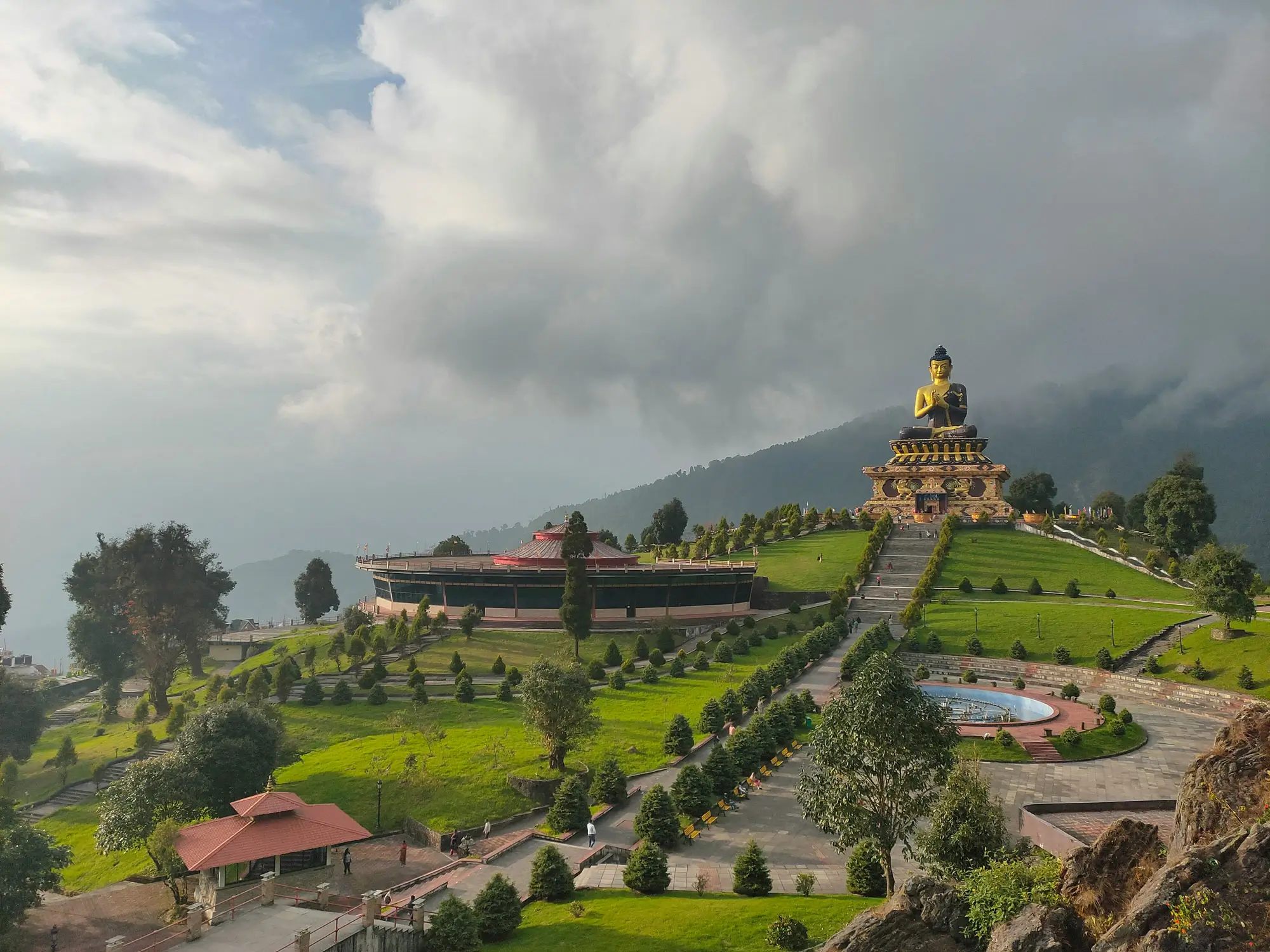
Adjoining Darjeeling, Sikkim is reached via Gangtok, the state capital, roughly 4–5 hours by road from Bagdogra/NJP. Tsomgo Lake and Gurudongmar Lake are glacial lakes at high altitude, accessible by permit (Inner Line Permits are required for parts of North Sikkim — arrange through a registered tour operator). The Pelling–Ravangla circuit offers monastery culture and mountain panoramas without the altitude demands of the northern lakes. Sikkim is known for its pleasant climate and Buddhist monastery culture, and unlike much of India, the state maintains notably clean towns and well-organised tourism infrastructure. Budget approximately ₹2,500–5,000 (≈ ৳3,000–6,000) per day.
The Golden Triangle: Delhi, Agra, Jaipur
The classic first-India circuit, and still the most recommended starting point for travellers who want India's most iconic sights in a single trip. Delhi (2–3 days): Old Delhi's Chandni Chowk for street food chaos, Humayun's Tomb and Qutub Minar (both UNESCO World Heritage Sites) for Mughal-era architecture, and the Delhi Metro for easy navigation across this sprawling capital. Agra (1–2 days): The Taj Mahal at sunrise is the essential experience — arrive at opening time to see the white marble mausoleum in soft early light before the crowds and heat build. Agra Fort and Mehtab Bagh (a riverside garden offering Taj views from across the Yamuna, away from the main crowds) complete the visit. Jaipur (2–3 days): The Pink City — Amber Fort's hilltop grandeur and mirror halls, the City Palace, Hawa Mahal's honeycomb façade, and the UNESCO-listed Jantar Mantar astronomical observatory. Budget ₹2,500–5,000 (≈ ৳3,000–6,000) per person per day including stays and transport. Best season: October to March. Delhi (DEL) is the main international gateway; high-speed trains connect all three cities efficiently.
Varanasi — The Spiritual Heart of India
One of the world's oldest continuously inhabited cities, and a profound spiritual experience regardless of your own faith. The evening Ganga Aarti ceremony at Dashashwamedh Ghat — a ritual fire offering performed by priests on the riverbank as the sun sets over the Ganges — is one of the most atmospheric religious spectacles available to any traveller in India. A sunrise boat ride along the ghats, watching the city wake and pilgrims begin their morning rituals, is equally essential. Often added to a Golden Triangle itinerary as a fourth stop.
Meghalaya — Closest to Sylhet, and Genuinely Extraordinary
Geographically the most natural extension for travellers in or near Sylhet, crossing at Tamabil–Dawki. Shillong, often called the Scotland of the East, is known as the live music capital of India, with waterfalls, lakes, and a coffee culture to match any Indian metro. Cherrapunji and Mawsynram hold the record as among the wettest places on earth, and are famous for living root bridges — centuries-old bridges grown from the roots of rubber fig trees by the local Khasi people, a genuinely unique engineering and ecological phenomenon found almost nowhere else on the planet. Best season: October to May. Budget approximately ₹2,000–4,000 (≈ ৳2,400–4,800) per day.
Things to Do
Watch Sunrise Strike Kanchenjunga from Tiger Hill, Darjeeling
Arrive in darkness, well before dawn, for the drive up to Tiger Hill. As the sky lightens, Kanchenjunga — the world's third-highest peak — catches the first light and glows pink, then gold, while the rest of the Himalayan range slowly emerges around it. One of the most memorable sunrise experiences available anywhere in South Asia, and on a genuinely clear November morning, unforgettable.
Ride the Darjeeling Himalayan Railway ("Toy Train")
A narrow-gauge steam (or diesel, depending on the service) railway first built in 1881, and a UNESCO World Heritage Site. The full-length journey or the shorter joy ride between Darjeeling and Ghum (the highest railway station in India) both offer dramatic mountain views and a genuine sense of Himalayan railway history.
Attend the Ganga Aarti at Varanasi
Every evening at Dashashwamedh Ghat, priests perform a synchronised fire ritual facing the Ganges as crowds gather on the steps and in boats on the river. Arrive early to find a good vantage point — either on the ghat itself or, for a different and arguably more atmospheric perspective, on a hired boat positioned on the water facing the ceremony.
Watch Sunrise at the Taj Mahal, Agra
Arrive at the gate before opening time. The white marble of the Taj Mahal changes colour through the early morning light — from soft pink to brilliant white — and the crowds are at their thinnest in the first hour after opening. This is the single most recommended timing for visiting the Taj Mahal among experienced India travel guides.
Explore College Street, Kolkata
Asia's largest second-hand book market — narrow lanes packed with bookstalls selling everything from rare academic texts to popular fiction, alongside the historic Indian Coffee House where generations of Bengali intellectuals have debated over coffee. A deeply atmospheric experience for anyone with a literary or cultural interest in Bengali heritage.
Trek to the Living Root Bridges, Meghalaya
Near Cherrapunji and Mawlynnong, centuries-old bridges grown by the Khasi people from the roots of rubber fig trees span streams and gorges in the dense Meghalaya forest. Reaching some of the more remote bridges requires a multi-hour trek with steep descents and ascents — genuinely demanding, and genuinely unlike anything else available to see in South Asia.
Take a Kolkata Food Walk
Sample kathi rolls from the stalls that invented them, mishti doi (sweetened yoghurt) and rasgulla from century-old sweet shops, and the city's distinct version of Bengali cuisine — close enough to Bangladeshi Bengali food to feel familiar, different enough to be genuinely interesting.
Visit a Tea Estate, Darjeeling
The Happy Valley Tea Estate, operating since 1854, offers factory tours explaining the processing of Darjeeling tea — one of the most prized tea varieties in the world followed by a tasting session. A natural complement for travellers already familiar with Sylhet's tea culture from the Bangladeshi side.
Recommended Itineraries
4 Days — Kolkata Weekend (Easiest First Trip)
- Day 1: Fly Dhaka → Kolkata (45 min). Victoria Memorial, Park Street.
- Day 2: College Street, Kalighat Temple, Howrah Bridge, evening Hooghly riverfront.
- Day 3: Day trip or local exploration — Botanical Garden, Indian Museum.
- Day 4: Return flight to Dhaka.
6 Days — Darjeeling & Sikkim
- Day 1: Fly to Bagdogra (via Kolkata or direct where available), drive to Darjeeling (3 hrs).
- Day 2: Tiger Hill sunrise, Toy Train ride, Happy Valley Tea Estate.
- Day 3: Himalayan Mountaineering Institute, local sightseeing, drive to Gangtok (4–5 hrs).
- Day 4: Tsomgo Lake (permit required), Gangtok monasteries and markets.
- Day 5: Pelling or Ravangla for monastery views, return toward Bagdogra.
- Day 6: Fly home via Kolkata.
7 Days — The Golden Triangle Plus Varanasi
- Day 1–2: Delhi — Old Delhi, Humayun's Tomb, Qutub Minar.
- Day 3: Agra — sunrise Taj Mahal, Agra Fort, Mehtab Bagh.
- Day 4–5: Jaipur — Amber Fort, City Palace, Hawa Mahal, bazaars.
- Day 6–7: Varanasi — sunrise boat ride, evening Ganga Aarti, return flight from Varanasi or Delhi.
For Tripzic group trips: All itineraries above are available as open group trips with full visa application guidance included. Land packages from ৳12,000 per person — international flight or land border transport booked separately.
Real Cost Breakdown (All in BDT)
Getting there:
- Flight Dhaka–Kolkata (return) ৳12,000–18,000
- Flight Dhaka–Delhi (return) ৳18,000–28,000
- Land border via Benapole (bus, one way) ৳400–600
- Maitree/Bandhan Express train (Dhaka–Kolkata) | ৳1,500–4,500
Visa:
IVAC service charge: ৳1,500 (all-inclusive, no separate government fee for Bangladeshi nationals)
Daily costs in India (per person):
- Category | Budget | Mid-range
- Accommodation | ৳1,300–2,800 | ৳3,700–9,000
- Meals (3x/day) | ৳600–1,200 | ৳1,500–2,800
- Local transport | ৳300–600 | ৳700–1,500
- Sightseeing/entry fees | ৳500–1,500 | ৳1,500–3,500
4-day Kolkata trip estimate (mid-range, per person):
Flight: ৳16,000 + Hotel 3 nights: ৳9,000 + Meals: ৳5,500 + Transport + sightseeing: ৳4,000 = approximately ৳32,000–35,000 total
6-day Darjeeling + Sikkim trip estimate (mid-range, per person):
Flight to Bagdogra (via Kolkata): ৳20,000 + Hotels 5 nights: ৳20,000 + Meals: ৳8,000 + Local transport/permits: ৳6,000 = approximately ৳54,000–60,000 total
Budget version: Travelling overland via Benapole and staying in budget accommodation throughout, a Kolkata trip can be completed for approximately ৳15,000–18,000 total including transport, stay, and food.
Tripzic group trip (land package):
Starting from ৳12,000 per person for Kolkata-focused trips, ৳25,000 for Darjeeling/Sikkim circuits. Includes accommodation, guided sightseeing, group meals, local transport, and visa application guidance. Add your chosen transport (flight or land border) for total cost.
Currency: Indian Rupee (INR). As of 2026, approximately INR 1 ≈ ৳1.20 BDT. Exchange at licensed money changers — better rates are generally available in Kolkata than at Dhaka airport. ATMs are widely available across India; digital payment apps (PayTM, Google Pay) are common in cities but a foreign card may not always work — carry sufficient cash as backup, especially outside major cities.
India vs Nepal vs Thailand — Where Should Bangladeshis Go First?
A genuinely useful comparison given that India has just reopened alongside two other extremely popular Bangladeshi destinations.
India:
- Visa: Required, physical sticker visa via IVAC, no government fee, ৳1,500 service charge, processing 4–7 working days (longer immediately post-reopening)
- Distance: Closest — 45 minutes to Kolkata, land border options
- Cultural fit: Highest — shared Bengali language and culture in Kolkata and West Bengal
- Range of experience: Largest by far — Himalayan hill stations to desert palaces to spiritual cities to tropical backwaters
- Best for: Cultural travellers, those with family connections, first-timers wanting maximum variety, budget-conscious overland travellers
Nepal:
- Visa: Free 30-day visa on arrival for Bangladeshis (SAARC benefit)
- Distance: 1.5 hours by flight
- Best for: Trekkers, Himalayan adventure seekers, those wanting a straightforward visa process
Thailand:
- Visa: eVisa required, ৳4,000 fee, 10 working day processing
- Distance: 2.5–3 hours by flight
- Best for: Beach travellers, first-time Southeast Asia visitors, those wanting developed tourism infrastructure
The honest verdict: With tourist visas freshly reopened, India offers Bangladeshi travellers the closest, most affordable, and most culturally resonant international trip currently available — but expect visa processing friction during the initial reopening period. Nepal remains the easiest visa process of the three. Thailand offers the most mature tourism infrastructure. For a Bangladeshi traveller weighing all three for a first international trip in 2026, India's reopening makes it newly competitive — particularly for those with family ties to West Bengal or a specific interest in the Himalayan hill stations.
Practical Tips
Carry photocopies: Always carry a photocopy of your passport and visa separately from the originals. Many hotels and some checkpoints request a copy for their records.
SIM card: Buy a local SIM at the airport on arrival (Airtel, Jio, Vi) — bring passport-size photos and a copy of your visa/passport, as registration requirements are strict for foreign nationals.
Water: Always use bottled or filtered water, including for brushing teeth, regardless of which city or region you are in.
Currency: ATMs are widely available in cities; digital payments are common but carry sufficient cash, especially when travelling to smaller towns or hill stations where card acceptance can be inconsistent.
Temple etiquette: Shoes must be removed before entering most temples carry socks if you are sensitive to hot stone or marble floors in summer.
FRRO registration: Long-stay visa categories may require registration with the Foreigners Regional Registration Office (FRRO) within 14 days of arrival — check indianfrro.gov.in if your visa category requires this. Standard short tourist visas typically do not.
Land border timing: If crossing by land at Benapole–Petrapole or another ICP, arrive early in the day — immigration processing can take time, especially during peak travel periods (Eid holidays, winter tourist season), and land borders typically close in the evening.
Stay updated on the visa situation: Given the recency of the June 2026 reopening, check ivacbd.com directly before finalising any travel plans — appointment availability, processing times, and documentation requirements may continue to be adjusted as the system scales back up to full capacity.
Frequently Asked Questions
Common questions from travelers
Yes. India's High Commissioner to Bangladesh, Dinesh Trivedi, announced on June 25, 2026 that normal tourist visa applications would resume from Sunday, June 28, 2026, ending a suspension of nearly two years that began following the political transition in Dhaka in August 2024. Applications are currently being accepted through five IVAC centres: Dhaka, Rajshahi, Chittagong, Sylhet, and Khulna, with further expansion expected. Always verify current status at ivacbd.com, as appointment availability may be limited during the initial reopening period due to high demand.
The Indian government does not charge a visa fee to Bangladeshi nationals under the bilateral travel agreement this has remained unchanged throughout the suspension period. However, IVAC charges a service fee of BDT 1,500 (all-inclusive) to process the application, revised from a lower rate as of August 10, 2025. No other legitimate fees apply be cautious of any agent or individual demanding additional payment for "guaranteed" or expedited appointments, as the High Commission of India has explicitly stated this is fraudulent.
Historically, tourist and visit visas have taken approximately 4 to 7 working days after IVAC accepts the submission. However, given the very high demand expected immediately following the June 28, 2026 reopening after nearly two years of suspension, processing times during the initial weeks are likely to be longer than this historical average. Apply as early as possible relative to your intended travel date.
Yes, via authorised Integrated Check Posts (ICPs) including Benapole–Petrapole (West Bengal, the most popular crossing), Akhaura–Agartala (Tripura), and Tamabil–Dawki (Meghalaya, near Sylhet), provided your visa specifically permits land entry and lists the correct authorised crossing point. The Maitree Express and Bandhan Express trains also operate directly between Dhaka and Kolkata via this same border region, offering a more comfortable alternative to the bus-and-walk crossing.
Kolkata is the most natural starting point a 45-minute flight from Dhaka, sharing Bengali language and cultural heritage, and requiring no major adjustment in food or customs. For travellers wanting a Himalayan experience, Darjeeling and Sikkim are reachable via Bagdogra airport and offer some of the most accessible genuine mountain scenery available to a Bangladeshi visitor. For the classic India highlights — the Taj Mahal, Mughal forts, and royal Rajasthan the Golden Triangle (Delhi–Agra–Jaipur) remains the most recommended circuit, typically requiring 7 days.
Yes, for certain areas. Parts of North Sikkim (including Tsomgo Lake and Gurudongmar Lake) require an Inner Line Permit in addition to your standard Indian tourist visa. Sensitive border regions including parts of Arunachal Pradesh, the Andaman Islands, and Ladakh require a separate Protected Area Permit. These are typically arranged through a registered local tour operator once you are in India, or in advance through your trip organiser. Tripzic group trips to these regions include permit handling as part of the package.
A 4-day Kolkata trip costs approximately ৳32,000–35,000 per person mid-range, including flights, accommodation, meals, and sightseeing, or as low as ৳12,000–18,000 traveling overland via the Benapole land border and staying budget. A 6-day Darjeeling and Sikkim circuit costs approximately ৳24,000–60,000 per person mid-range. A 7-day Golden Triangle (Delhi–Agra–Jaipur) trip typically runs ₹2,500–5,000 (≈ ৳3,000–6,000) per day excluding international flights. Tripzic group trips start from ৳12,000 per person for the land package on Kolkata-focused itineraries.
Tourist visa resumption itself is a strong positive signal India would not reopen normal tourist visa processing without considering the situation stable enough to do so. That said, given the diplomatic sensitivities of the past two years, Bangladeshi travelers should maintain standard travel awareness, avoid political discussions or commentary in public settings, keep copies of all documents accessible, and stay informed of the current relationship status before and during travel. The vast majority of everyday interactions for tourists at airports, hotels, monuments, and with local guides remain unaffected by diplomatic-level matters. Travelling with a registered group or verified local host, as Tripzic provides, adds an additional layer of guidance and support.