Sundarbans
Curated trips to the Sundarbans — Royal Bengal Tiger, mangrove river safaris, houseboat stays & eco village life. Verified hosts.
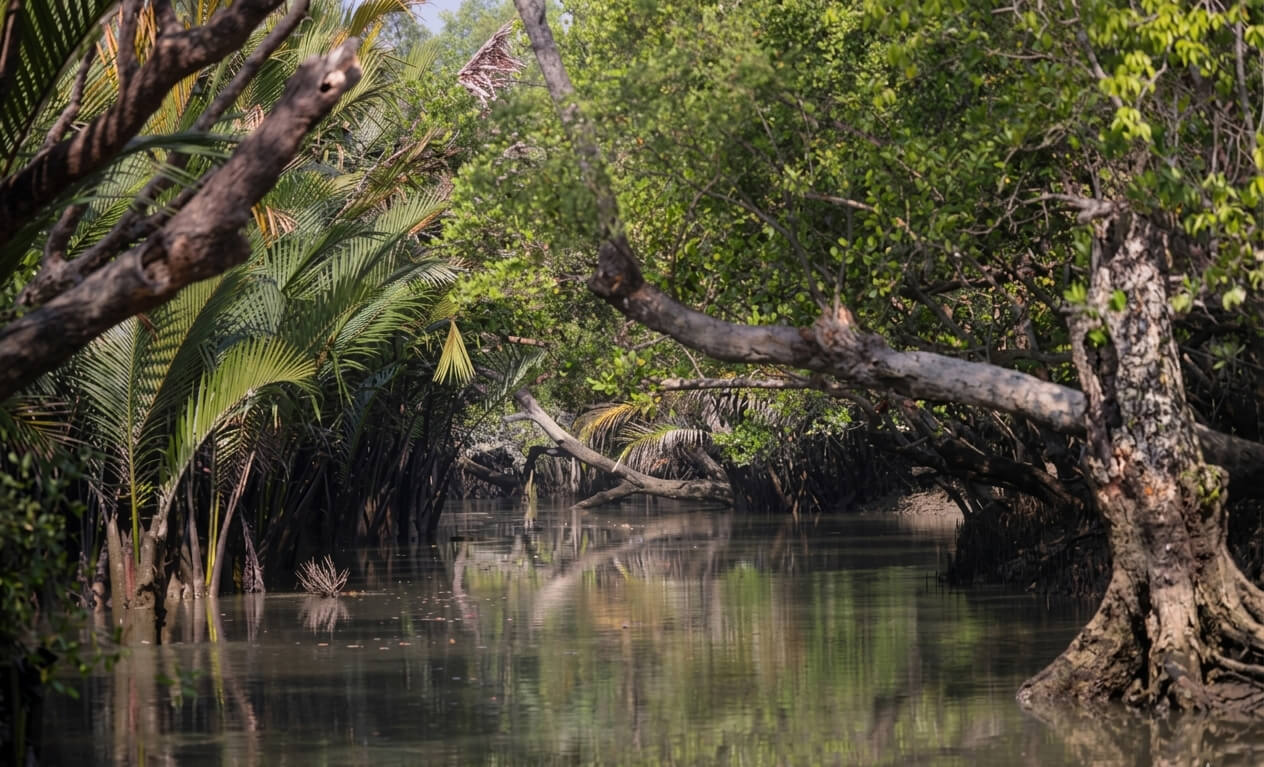
The Sundarbans is the world's largest mangrove forest and one of the most extraordinary places on earth. It stretches across the southern coast of Bangladesh and northeastern India, where the Ganges, Brahmaputra, and Meghna rivers drain into the Bay of Bengal through a vast tidal delta. The Bangladesh side covers 6,017 square kilometres the larger, wilder, and less-visited half of the forest. It is the only mangrove ecosystem in the world where Royal Bengal Tigers live. It is home to saltwater crocodiles, Irrawaddy dolphins, river otters, spotted deer, and over 300 species of birds. And it is a place where you sleep on a wooden boat anchored in silence, inside the jungle, listening to the forest breathe around you. Tripzic connects you with verified local operators who know this forest. Small groups. Silent boats. Real wildlife. No picnic-party tourism.
Sundarbans Travel Guide
Everything you need to plan your trip
Getting There from Dhaka
The Sundarbans is accessed through Khulna Bangladesh's third-largest city and the main gateway to the forest. All forest tours depart from Mongla Port or Khulna's Rupsha Ghat by boat. From there, your journey into the forest takes 2–4 hours depending on your entry point and destination.
There are three ways to get from Dhaka to Khulna:
By Bus
The most common option. Multiple operators run daily and overnight services from Dhaka's Gabtoli and Sayedabad bus terminals to Khulna. Non-AC buses cost ৳500–700. AC coaches run ৳900–1,400. Journey time is 7–9 hours. Recommended operators: Soudia, Eagle, Hanif.
By Train
The Sundarban Express (departs 6:20am) and Chitra Express (departs 9:00pm) run from Dhaka's Kamalapur Rail Station to Khulna daily. Journey time is 9–10 hours. Tickets range from ৳300 (Shuvon class) to ৳1,100 (AC Berth). Book at least 3–5 days in advance — trains sell out fast, especially on weekends and public holidays.
By Rocket Steamer
A uniquely Bangladeshi experience and one of the great river journeys of Asia. The BIWTC paddle steamer departs Sadarghat, Dhaka on Tuesday and Saturday evenings, arriving in Khulna the following morning. Cabin classes range from ৳350 (Deck) to ৳2,400 (First Class Cabin). Slow, atmospheric, and unforgettable. Many travelers combine a Rocket Steamer ride with a Sundarban trip — Khulna arrival lines up perfectly.
Important:
You cannot enter the Sundarbans independently. All visitors must travel with a licensed tour operator. Forest entry permits are mandatory and are arranged by your operator, this is included in all Tripzic group trips.
Best Time to Visit
October to March is the best time to visit the Sundarbans. The weather is dry and cool (18–28°C), rivers are calm, and wildlife activity is at its peak. Water levels drop in winter, exposing more muddy riverbanks — the spots where tigers come to drink. Tiger sighting probability is highest between November and February. This is also prime birdwatching season, with migratory species arriving from across Asia.
April to May is hot and humid but workable. Fewer tourists mean quieter forest trails and slightly lower prices. Most wildlife remains active. The forest is at its greenest after the previous monsoon.
June to September (Monsoon) is not recommended for most travelers. Cyclones are a real risk in the Bay of Bengal during this period, the Sundarbans has been severely hit multiple times in recent years (Cyclone Sidr, Aila, Amphan, Bulbul). Rivers swell and become unpredictable. The Bangladesh Forest Department suspends or heavily restricts tourism permits during active cyclone warnings. Experienced, adventurous travellers who visit in monsoon can see the forest in a raw, rarely-seen form — but this is not suitable for first-time visitors or families.
Top Places to Visit
Kotka Wildlife Sanctuary The most visited area of the Bangladesh Sundarbans, and with good reason. Kotka sits where the Kocha River meets the Bay of Bengal, creating a rare open shoreline edge — a "beach" inside the forest. Tigers patrol this riverbank regularly, especially at dusk and early morning. The Kotka Watch Tower gives a wide view over the treetop canopy and river mouth. This is where most tiger sightings are reported.
Karamjal Wildlife Breeding Centre Located just 1.5–2 hours by boat from Mongla port, Karamjal is the most accessible entry point into the Sundarbans and a perfect introduction for first-time visitors. The government-run centre houses spotted deer, estuarine crocodiles, and smooth-coated otters in semi-wild enclosures. Short walking trails through the mangrove edge give your first real sense of the forest environment.
Hiron Point (Nilkamal) A designated wildlife sanctuary in the western range of the Bangladesh Sundarbans. Hiron Point has one of the few walking trails in the entire forest — a raised wooden boardwalk through dense mangrove that guides lead at dawn. Excellent for birdwatching. The open river view at the point is one of the most photographed spots in the Sundarbans.
Dublar Char (Deer Island) A remote, flat island at the far southern edge of the Bangladesh Sundarbans, where the forest meets the open Bay of Bengal. Dublar Char is famous for its large population of spotted deer that roam the open grassland in herds — unlike the dense jungle elsewhere. In November, the island hosts the Hindu Ras Mela festival, drawing tens of thousands of pilgrims to the forest's edge in an extraordinary cultural scene. This is a longer boat journey — typically part of 5–8 day extended tours.
Tin Kona Island A triangular-shaped island at the confluence of three rivers — hence its name (tin kona means "three-cornered"). The boat ride through the narrow tidal canals surrounding Tin Kona is one of the most atmospheric in the Sundarbans. Crocodile sightings here are relatively common in the dry months.
The Sundarban Canals Much of what makes the Sundarbans extraordinary is not any single spot — it is the experience of drifting silently through narrow tidal canals on a wooden rowing boat, surrounded by the arching roots of Sundari trees, listening to kingfishers call, and knowing that tigers move invisibly through the trees on either side. This is why you come.
Things to Do
Tiger Safari by Boat The Sundarbans is the only place on earth where you can search for Royal Bengal Tigers from a river. Your guide navigates slowly along the forest edge at dawn and dusk — the hours when tigers come to the water. Raised watch towers at Kotka and Hiron Point give elevated views over the riverbank. Sightings are never guaranteed — but based on operator reports, approximately 1 in 4 to 1 in 6 multi-day tours results in a confirmed sighting. The search is the experience.
River Canal Cruising The heart of any Sundarban trip. Your group transfers to a smaller wooden rowing boat — engine off, completely silent — and glides through canals too narrow for motor vessels. This is how you get closest to wildlife and deepest into the forest. The best canal cruises happen at first light, before the forest wakes fully.
Birdwatching The Sundarbans hosts over 300 bird species. The forest is one of the few places in the world where you can see all nine species of kingfisher in a single trip — including the rare brown-winged, ruddy, stork-billed, and black-capped kingfisher. Other notable species: white-bellied sea eagle, lesser adjutant stork, masked finfoot, mangrove whistler, and various herons, egrets, and sandpipers. October to February is peak season.
Dolphin and Crocodile Spotting Irrawaddy dolphins and Ganges River dolphins are frequently seen in the wider river channels, often in small pods. Saltwater crocodiles — among the largest in Asia, reaching up to 6 metres — sun themselves on exposed mudflats in the dry season. Your boat guide knows the regular spots.
Village and Community Visits The communities living on the edge of the Sundarbans have one of the most unusual relationships with nature of any people in Bangladesh. The Mowali collect wild honey from deep inside the forest, wearing basic protective gear and praying before each entry. The Baowali fish the tidal rivers. Jele communities have fished these waters for generations. A guided visit to Munshiganj, Burigoalini, or Shyamnagar adds rare human depth to the forest experience — and directly supports the local economy.
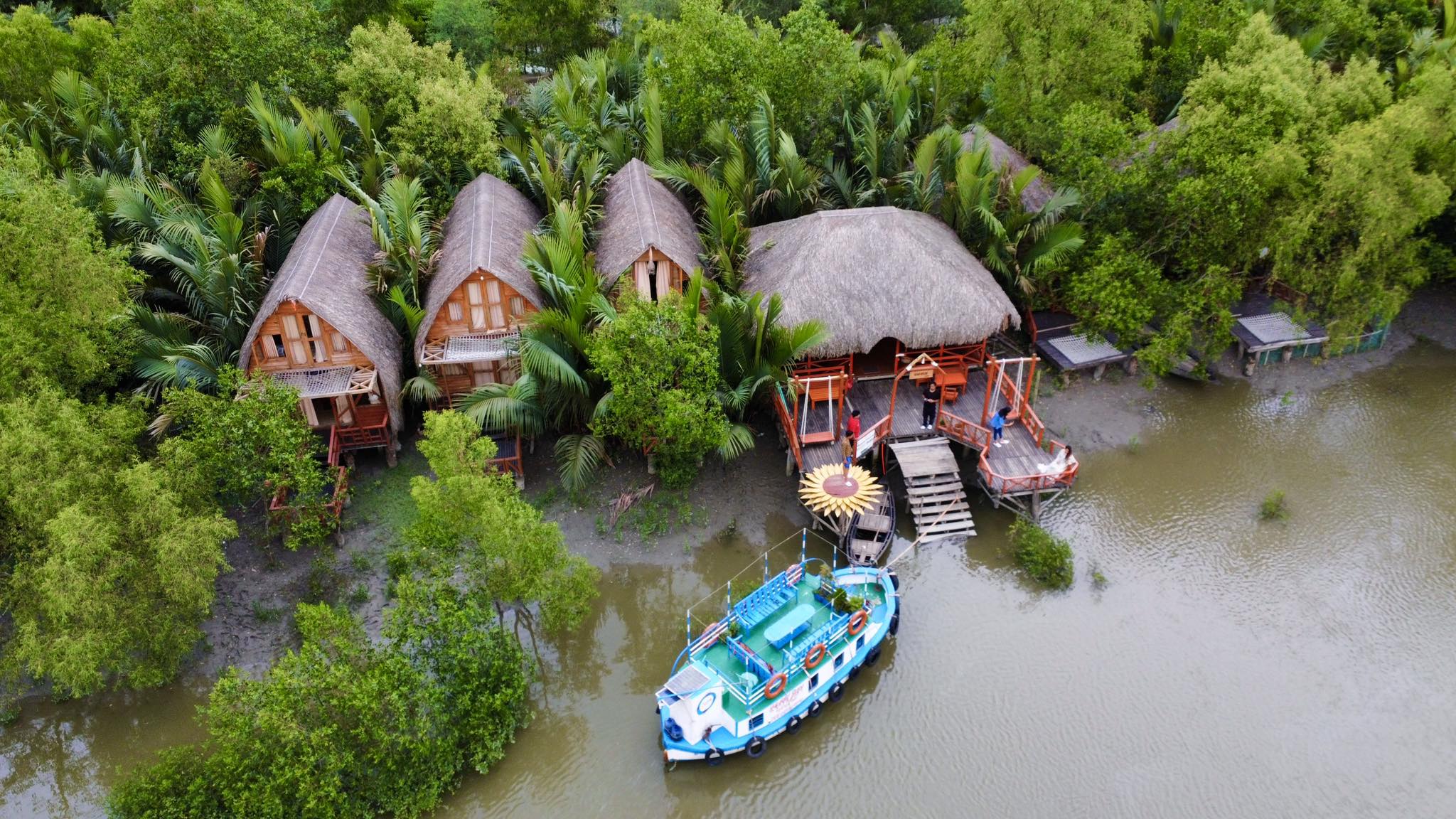
Night Aboard a Houseboat Almost all Sundarban group tours include at least one — and ideally two or three — nights anchored aboard a houseboat inside the forest. After the evening safari, the boat drops anchor in a wide river channel. The engine is switched off. The forest goes quiet. Dinner is served on deck. This is the experience most travellers say they remember longest.
Life Aboard the Boat
Most Sundarban group tours are based on a houseboat — this is your hotel, your dining room, and your base for every safari. Understanding what to expect makes a real difference to how you pack and how much you enjoy the trip.
Boat types: Basic wooden houseboats have simple sleeping berths, shared bathrooms, and a covered deck. Mid-range boats have small private cabins with attached bathrooms and air circulation fans. Premium boats have air-conditioned cabins, Western-style toilets, and more spacious common areas. All Tripzic-verified operators use boats that are regularly inspected and carry life jackets for every passenger.
Food: Meals are prepared fresh on board by a dedicated cook. Expect rice, dal, fresh fish from the river, seasonal vegetables, and eggs — simple, authentic Bangladeshi cooking. Most operators can accommodate vegetarian requirements with advance notice. Drinking water is provided. Many travellers report the food as a genuine highlight.
Sleeping: Nights are anchored inside the forest, usually in a wide river channel with a watchman on duty through the night. Engines are off after anchoring — nights are genuinely quiet. You will wake before dawn for the first safari. The Sundarbans is loud at 4am — birds, insects, and the occasional distant splash. Light sleepers should bring earplugs.
What to pack for the boat: Light breathable clothing (full sleeves recommended for insects), closed shoes for any land excursions, flip-flops or sandals for the boat deck, a torch or headlamp, insect repellent, sunscreen, personal medication, a waterproof bag or dry bag for your phone and camera, and enough cash for the entire trip. There are no ATMs, mobile banking points, or shops inside the forest.
How Much Does a Sundarban Trip Cost?
This is the question every traveller asks, and most operators avoid answering clearly. Here is a straightforward breakdown:
If booking independently (not recommended for first-timers):
Forest Entry Permit (Bangladeshi): ৳1,500–2,500 per trip. Forest Entry Permit (Foreign): USD $115 per person. Basic houseboat (per person per night): ৳1,500–2,500. Mid-range houseboat (per person per night): ৳2,500–4,000. Premium houseboat (per person per night): ৳4,000–6,000. Local guide fee (per day): ৳800–1,500. Dhaka to Khulna (AC bus): ৳900–1,400. Dhaka to Khulna (train, AC berth): ৳1,100. Rocket Steamer (First Class Cabin): ৳2,400.
If booking a Tripzic group trip (all-inclusive, no hidden costs):
Tripzic group trips start from ৳4,500 per person and include forest permits, boat accommodation, all meals, guide fees, and all in-forest transport. You pay one price in Dhaka — everything else is handled.
Note: Foreign nationals pay the higher USD permit fee regardless of how they book — this is a Bangladesh Forest Department requirement and applies to all operators equally.
Bangladesh Sundarbans vs India Sundarbans
The Sundarbans spans both Bangladesh and India, but the two sides are very different experiences. This is one of the most common questions travellers ask — and the answer matters for planning.
Bangladesh Sundarbans (6,017 sq km) The larger half of the forest. Less commercialised, with far fewer tourists and more remote wilderness access. Tiger density is considered higher on the Bangladesh side, and because tourism volume is lower, wildlife is less disturbed. The experience feels genuinely wild — you are not sharing the river with dozens of other tour boats. Most tours are boat-based, with nights spent anchored inside the forest. Entry is through Khulna or Mongla.
India Sundarbans (~4,260 sq km) More developed for tourism, with better English-language infrastructure and more accommodation options near the forest edge. Easier to access independently for international travellers arriving in Kolkata (entry via Canning, Godkhali, or Gosaba). More boat traffic on popular routes. More established tour packages at various price points.
The honest verdict: For raw, immersive mangrove wilderness and the best tiger sighting conditions, the Bangladesh Sundarbans is the stronger choice. For first-time international visitors who want more comfort, more English-speaking infrastructure, and easier logistics, the India entry points are more accessible. If you have time, the ideal trip combines both — but most travellers choose one side per visit.
Wildlife You Can Realistically See
Many tour operators make vague wildlife promises. Here is an honest picture of what you are likely to see in the Bangladesh Sundarbans on a 3–5 day trip:
Almost certain to see: Spotted deer (chital) in large herds, especially near Kotka beach and Dublar Char. Rhesus macaque monkeys — in the trees along canal banks. Water monitor lizards — on mudflats, up to 2 metres long. Multiple kingfisher species — along every canal, every morning. Various herons, egrets, and waders — throughout the day.
Commonly seen: Irrawaddy and Ganges River dolphins — in wide river channels. Saltwater crocodiles — on mudflats in dry season. Wild boar — near forest edges. Smooth-coated otters — in tidal streams, usually at dusk.
Occasionally seen (highlight of the trip when it happens): Royal Bengal Tiger — approximately 1 in 4 to 1 in 6 multi-day trips results in a confirmed sighting, based on operator experience. The Kotka riverbank at dawn is the single best location.
Rare but present: Fishing cat, Indian python, horseshoe crab, olive ridley sea turtle (near Dublar Char).
Birds to look for specifically: All 9 kingfisher species (brown-winged, ruddy, stork-billed, black-capped, collared, white-throated, blue-eared, small blue, common). White-bellied sea eagle. Lesser adjutant stork. Masked finfoot (very rare, high value sighting). Mangrove pitta. Goliath heron.
Responsible Travel in the Sundarbans
The Sundarbans is under active environmental pressure. Rising sea levels are eroding the coastline. Cyclones Sidr (2007), Aila (2009), and Amphan (2020) caused severe damage to both the forest and the communities living on its edge. Saltwater intrusion from climate change is affecting the Sundari tree — the mangrove species that gives the forest its name.
Responsible tourism is one of the few forces that both funds forest conservation and gives local communities an economic alternative to illegal logging and poaching.
How to travel responsibly in the Sundarbans:
- Book with a licensed, verified operator — only they hold the permits that fund the Forest Department
- Choose operators that use rowing boats in canals, not motorboats — less disturbance to wildlife, lower emissions
- Do not litter — carry a bag for your waste and bring it back out
- Do not play loud music on the water — it disturbs wildlife and ruins the experience for other travellers
- Do not feed animals — it disrupts natural behaviour and can cause dangerous habituation
- Buy directly from local artisans and honey sellers in border villages — your money stays in the community
- Do not smoke inside the forest — open flames in a dry mangrove are a serious fire risk
All Tripzic-verified Sundarban operators follow Bangladesh Forest Department guidelines and are committed to low-impact tourism practices.
Frequently Asked Questions
Common questions from travelers
Yes. A forest entry permit from the Bangladesh Forest Department is mandatory for all visitors — Bangladeshi and foreign. You cannot enter the forest without one. When you book a group trip through Tripzic, your permit is arranged and fully included in the package price. You do not need to do anything separately. Foreign nationals pay a higher permit fee (approximately USD $115 per person) set by the Bangladesh Forest Department. This applies to all operators equally — it is not an operator markup.
Group trips on Tripzic start from ৳4,500 per person for a 2-night, 3-day boat-based tour covering Karamjal and Kotka. Longer expeditions to Dublar Char, Hiron Point, and the deep forest range from ৳8,000–15,000 per person depending on duration, boat tier, and group size. All Tripzic packages include boat accommodation, all meals, forest permits, guide fees, and in-forest transport. There are no hidden charges.
Yes — with a licensed, experienced operator. Tigers are real and present throughout the forest, which is why the rule of staying with your guide on land is absolute and non-negotiable. The forest is safe when you follow the guidelines. Thousands of visitors travel safely every year. Tripzic only partners with operators who are licensed by the Bangladesh Forest Department and who follow all established safety protocols — including life jackets on all boat journeys, mandatory guide accompaniment on land, and communication equipment for emergencies.
Pack light. Essentials: lightweight, breathable full-sleeve clothing (protection from insects and sun), closed shoes for land walks, sandals or flip-flops for the boat deck, insect repellent, sunscreen, a waterproof dry bag for phone and camera, a torch or headlamp, personal medication, and cash for the full trip. There are no ATMs, shops, or mobile payment points inside the Sundarbans. Your operator provides all bedding, meals, and drinking water on the boat. A zoom or telephoto lens makes a significant difference for wildlife and bird photography — the forest is wide and animals are often spotted at distance across a river.
October to March is the best window — dry and cool (18–28°C), calm rivers, and the highest wildlife activity. November to February is peak season for both tiger sightings and birdwatching. April and May are manageable but hot. Avoid June to September due to cyclone risk and flooding — the Forest Department restricts or suspends permits during active weather warnings.
Most multi-day Sundarban tours involve sleeping aboard a houseboat anchored inside the forest. After your evening safari, the boat finds an anchorage in a wide river channel. The engine is switched off. Dinner is served on deck, often under stars. Nights are genuinely quiet — no traffic, no city noise. You will wake before dawn for the first safari of the day. Basic boats have shared sleeping berths; mid-range and premium boats have private cabins. All Tripzic-verified boats carry life jackets and have a night watchman on duty.
The Bangladesh side (6,017 sq km) is larger, less commercialised, and considered wilder. Tiger density is higher, tourism volume is lower, and the experience is more remote. The India side (~4,260 sq km) has better English-language tour infrastructure and is easier to access for international travellers arriving in Kolkata. For raw mangrove wilderness and the best wildlife conditions, Bangladesh is the stronger choice. For more comfort and accessibility, India's entry points at Canning and Godkhali are more straightforward.