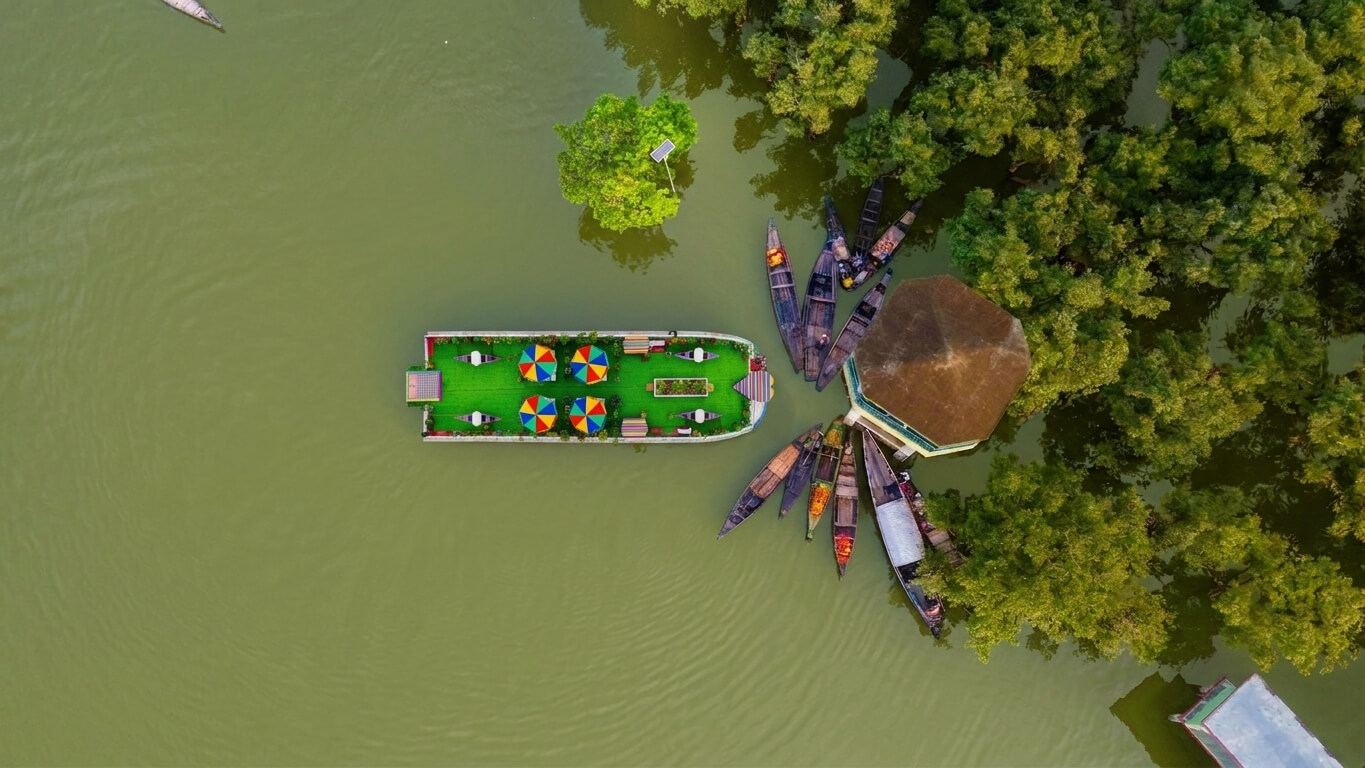
Tanguar Haor
Bangladesh's most breathtaking wetland houseboat nights under open sky, Niladri Lake, migratory birds & the Meghalaya hills on the horizon.
Tanguar Haor is Bangladesh's most extraordinary wetland and one of the most unusual landscapes in all of South Asia. Located in the Dharmapasha and Tahirpur upazilas of Sunamganj District in Sylhet Division, it covers approximately 100 square kilometres of floodplain at the foot of the Meghalaya hills, where the runoff from the mountains of northeastern India meets the rivers of Bangladesh in a vast, shimmering inland sea.
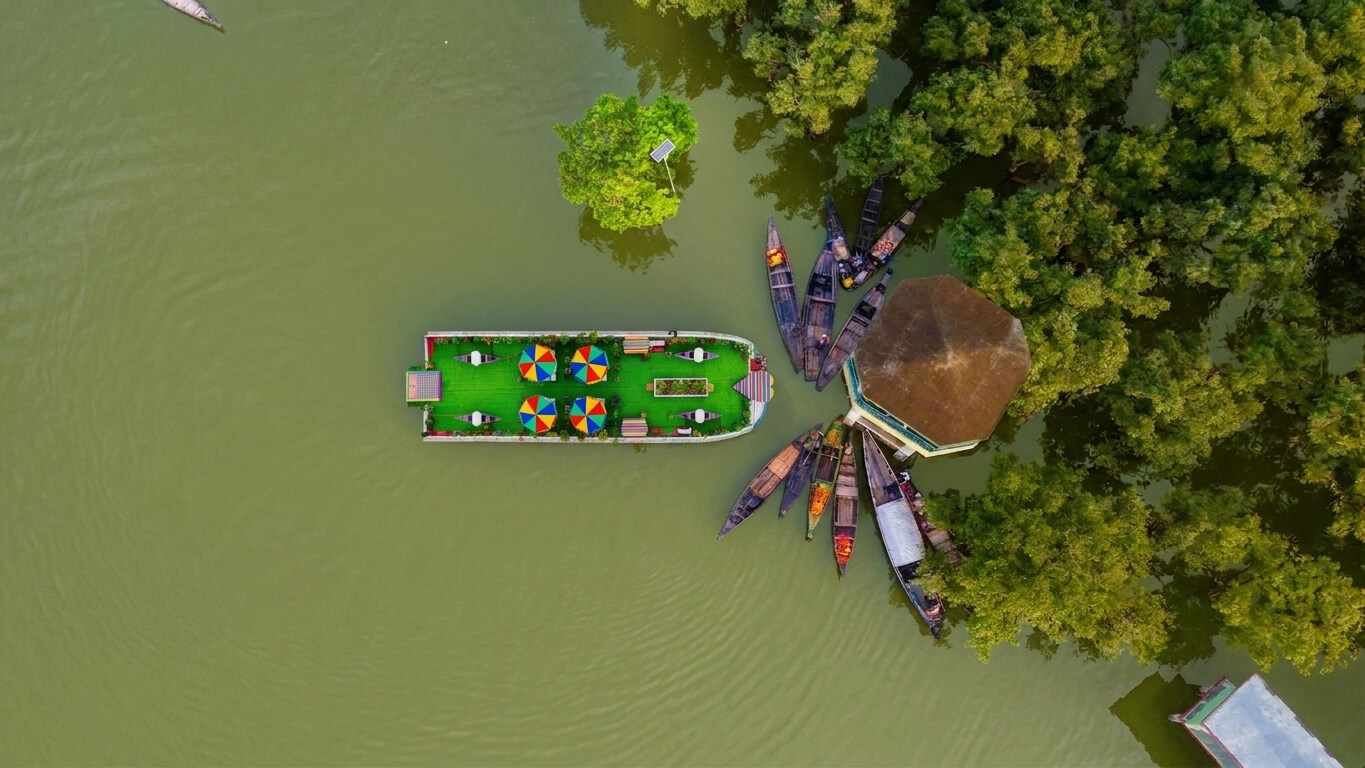
Tanguar Haor Travel Guide
Everything you need to plan your trip
Getting There from Dhaka
Tanguar Haor is about 290 kilometres from Dhaka, roughly 6–7 hours by road. The destination requires a multi-step journey: Dhaka to Sunamganj, then local transport to Tahirpur or Tekerghat, then boat into the haor. Planning this in advance makes all the difference.
Route 1 — Bus to Sunamganj (Most Common)
Buses depart from Sayedabad and Mohakhali bus stands in Dhaka directly for Sunamganj. Mamun and Shyamoli run from Sayedabad; Ena runs from Mohakhali. Non-AC bus fare: ৳820–850 per person. Journey time: approximately 6 hours. Night buses are ideal — depart Dhaka around 10pm, arrive Sunamganj by 7am, giving you a full day on the haor.
At Sunamganj: Get off at the Surma Bridge bus stop. From here, hire a CNG or motorcycle to Tahirpur Bazar (approximately 1 hour, fare: ৳60–80 per person by shared transport or ৳200–300 for a reserved motorcycle). From Tahirpur Ghat, hire a boat into the haor.
Route 2 — Train to Mohanganj (Best for Monsoon)
The Haor Express departs Dhaka's Kamalapur Railway Station nightly at 11pm and arrives at Mohanganj station the next morning. Fare: ৳110 per person (Shuvon class). From Mohanganj station, take a CNG or auto to Moddhonogor (1 hour, ৳70). From Pipra Kanda Ghat in Moddhonogor, hire a trawler, speedboat, or boat directly to Tekerghat during monsoon. Trawler rental starts from ৳1,000–2,000. This route is especially popular during monsoon when water levels are high enough for direct boat access across the haor.
Route 3 — Via Sylhet (For Those Coming from Sylhet)
From Kumargaon bus stand in Sylhet, take a local or sitting bus to Sunamganj. Sitting bus fare: ৳100. Journey time: approximately 2 hours. Then continue to Tahirpur as above.
Recommended day plan (overnight bus route):
- 10pm: Depart Dhaka by night bus
- 7am: Arrive Sunamganj — breakfast
- 8am: CNG/motorcycle to Tahirpur Ghat
- 9:30–10am: Board hired boat at Tahirpur Ghat
- All day: Haor exploration (watchtower, middle of haor, toward Tekerghat)
- Afternoon: Reach Tekerghat area, Niladri Lake, Barikka Tila
- Evening: Anchor boat and spend night on the haor
- Next morning: Jadukata River, Shimul Bagan (if spring)
- Afternoon: Return to Sunamganj, bus back to Dhaka
Best Time to Visit
Tanguar Haor is one of Bangladesh's rare destinations with two completely different peak seasons — and which one is "best" depends entirely on what you want to see.
Monsoon Season — June to October (The Iconic Experience)
The monsoon is when Tanguar Haor becomes what it truly is. Heavy rainfall and overflow from the Meghalaya hills fill the wetland to capacity, sometimes reaching water depths of up to 10 metres. The entire landscape transforms into a vast inland sea. Trees like Hijol and Koroch stand tall amidst the water, creating a surreal floating forest. Villages appear like isolated islands scattered across the water. The Meghalaya mountains rise as a distant backdrop, capped with clouds. The sky, water, and hills merge into a single visual experience.
June to October is widely considered the best time by most travellers. The haor is at its most beautiful, most immersive, and most photographed during this window. July and August are peak monsoon — the most dramatic and the most water. September and October offer a balance of high water and slightly calmer weather.
Important: Monsoon means rain. Pack waterproof bags for electronics, light rainwear, and accept that you will get wet. This is part of the experience.
Winter Season — November to February (The Birdwatcher's Season)
In winter, the water recedes and Tanguar Haor transforms into a sanctuary for thousands of migratory birds arriving from Central Asia and Siberia. Over 135 species have been recorded here including various species of ducks, geese, grebes, and waders. Birdwatchers and wildlife photographers consider this the essential season.
The haor in winter is calmer, drier, and easier to navigate. Water levels are lower — you see more land, more paths, and can trek across parts of the haor. November and February offer the best balance of birds and comfortable weather. December and January are peak birdwatching months but can be cold overnight on the boat — bring warm layers.
The Full Moon Experience
A growing number of travellers specifically time their Tanguar Haor trip to coincide with the full moon. Staying overnight on a boat anchored in the middle of the haor on a full moon night — with moonlight reflected across the still water and no light pollution for kilometres — is described by returning visitors as one of the most memorable nights they have spent anywhere in Bangladesh.
Top Places to Visit
Tanguar Haor Core Area (Watchtower)
The heart of the haor experience. Your boat navigates through the main haor body — passing floating vegetation, fishing communities in small wooden boats, and the watchtower that gives an elevated view across the entire wetland. The watchtower is especially popular during monsoon when the view from above shows just how vast and water-filled the haor becomes. Children from nearby villages paddle small boats out to curious visitors — one of the most memorable human encounters in Bangladeshi travel.
Niladri Lake (Shaheed Siraj Lake / Tekerghat)
The single most-photographed spot in the Tanguar Haor region — and one of the most visually striking natural sites in all of Bangladesh. Niladri Lake is a flooded limestone quarry at Tekerghat that fills with crystal-clear turquoise-blue water during monsoon. The surrounding white limestone rocks and brilliant blue water against the green hills of Meghalaya behind create a colour combination unlike anything else in the country. It has earned the nickname "the Kashmir of Bangladesh." There is no entry fee. Kayaking is available at ৳100 per person (boat holds 2 people, ৳200 total). Wear a life jacket — the lake is deep. A short walk from where boats anchor at Tekerghat.
Tekerghat Limestone Quarry
Right next to Niladri Lake. The abandoned limestone quarry at Tekerghat has an otherworldly quality — white stone banks, clear water, and the Meghalaya hills as a backdrop. During monsoon, much of it is submerged. In winter, the exposed white limestone creates a dramatic landscape.
Barikka Tila (Barek Tila)
A small hill right next to the Jadukata River that gives a beautiful panoramic view of the river and surrounding landscape. In winter, the riverbank is covered in vast sand dunes — an unusual desert-like landscape that surprises most visitors. The hill is an easy climb. Best visited at sunset.
Jadukata River
The Jadukata River flows along the northeastern border of Bangladesh, forming the boundary between Bangladesh and Meghalaya. The river is crystal-clear in winter — you can see the riverbed. To cross it, motorcycles are loaded onto flat trawlers (৳10 per motorcycle, ৳5 per person). During monsoon, the river becomes wide and dramatic, merging visually with the haor. The Shimul Bagan (cotton tree garden) on the banks of the Jadukata blooms in spring — rows of red Shimul flowers create one of Bangladesh's most beautiful seasonal landscapes. If visiting in February or March, do not miss this.
The Swamp Forest
A cluster of submerged forest inside the haor where Hijol, Koroch, and other aquatic trees grow from the water. During monsoon, your boat can navigate right through the trees — branches overhead, water below, birdsong everywhere. This is the most unique natural feature of Tanguar Haor and the one no photograph fully captures.
The Floating Villages
The communities living inside and around Tanguar Haor are among the most unique in Bangladesh. During monsoon, their homes are surrounded by water on all sides — the village paths become waterways, children go to school by boat, and the rhythm of daily life is entirely organised around the water. Asking your boat operator to take a slower route through a village area adds significant depth to the trip.
Lakma Chhara
A stream near Tekerghat that flows down from the Meghalaya hills — fast-moving, clear water cutting through rocky terrain. Worth visiting if time permits during a multi-day trip.
---
Things to Do
Houseboat Night Under Open Sky
The defining Tanguar Haor experience. Anchor your hired houseboat in the middle of the haor after sunset. No towns, no light pollution, no noise — just water, stars, and the sounds of the wetland at night. Dinner is cooked on board — fresh fish from the haor, rice, dal, vegetables. Sleep under the open sky or in covered berths. Wake before dawn as the haor comes alive with bird calls and morning mist. Most travellers who do this say it is the most memorable night they have spent in Bangladesh.
Boat Safari Through the Haor
All exploration in Tanguar Haor is by boat. Your hired vessel navigates from Tahirpur through the main haor body, through the swamp forest, toward Tekerghat and the Meghalaya horizon. The journey itself is the experience — there is no single spot to "tick off." Budget a full day minimum for the boat journey. The best route goes: Tahirpur Ghat → Watchtower → Swamp Forest → Middle of Haor → Tekerghat (Niladri Lake) → overnight anchored → morning Jadukata River → return.
Birdwatching
Tanguar Haor hosts 135+ bird species. Winter visitors include: Bar-headed geese, Ferruginous ducks, Tufted ducks, Garganey, Northern pintail, Common pochard, Great crested grebe, Purple swamphen, Pied kingfisher, Lesser adjutant stork, and various species of herons and egrets. Serious birdwatchers should arrive before dawn with binoculars — the morning hours are when the most species are active and visible.
Swimming and Kayaking at Niladri Lake
The turquoise-blue water of Niladri Lake is one of Bangladesh's most inviting natural swimming spots. The water is crystal clear and cold even in summer. Exercise caution — the lake is deeper than it appears. Always wear a life jacket when kayaking. Kayaks are available for rent at ৳100 per person per hour. No entry fee to the lake.
Photography — The Golden Hours
Tanguar Haor rewards photographers who get up early. The combination of morning mist, reflections on still water, silhouettes of fishing boats, and the distant Meghalaya hills creates photography opportunities that are genuinely unique to this location. Full moon nights are equally extraordinary. Bring a wide lens for the haor and a telephoto for birdwatching.
Fishing with Local Communities
Ask your boat operator to arrange a morning fishing session with a local fisherman. The traditional fishing techniques in Tanguar Haor — nets, traps, and handlines from small wooden boats — are centuries old. Fresh fish caught in the haor and cooked on your boat the same morning is a meal most visitors never forget.
Full Moon Night Experience
Plan your visit around the full moon for a dramatically different night experience. Moonlight across still water in a Ramsar-protected wetland with no artificial light — this is the kind of experience that does not exist most places on earth anymore. Check the lunar calendar before booking.
Houseboat Guide — What to Expect
All multi-day Tanguar Haor trips are based on a hired boat — this is your transport, your accommodation, and your dining room throughout the trip.
Types of boats available:
Small wooden trawler (most affordable): Basic covered shelter, sleeping mats on deck, a cook who prepares meals on a portable stove. Fits 6–12 people. Hire from Tahirpur Ghat. Daily rental: ৳3,500–7,500 for the whole boat.
Mid-range houseboat: Covered berths, basic sleeping arrangements, a dedicated cook, more space. Daily rental: ৳3,000–5,000 for the whole boat. Best split among 6–10 people.
Premium houseboat (organised tours): Larger vessels with separate sleeping cabins, attached bathrooms, generator for lighting. Daily rental: ৳6,000–10,000+. Available through organised tour operators including Tripzic group trips.
Food on the boat:
Your boat cook prepares all meals from ingredients purchased before departure at Tahirpur Bazar market. Standard meals: rice, fresh fish from the haor, lentil dal, vegetables, eggs. The fish is genuinely some of the freshest you will eat in Bangladesh — caught locally that morning by haor fishermen and sold at the ghat.
What to bring:
Light waterproof jacket or poncho (monsoon essential), waterproof dry bag for phone and camera, torch or headlamp (no electricity on the haor), insect repellent (mosquitoes are active at dusk and dawn), warm layer (winter nights on the water are cold), cash for the entire trip (no ATMs in Tahirpur or Tekerghat area), personal medication including motion sickness tablets if you are sensitive to boat movement.
Sanitation:
Basic boats have no toilet facilities — the river and open air are the reality. Mid-range and premium houseboats have simple toilet arrangements. If sanitation is a concern, ask your operator specifically about facilities before booking.
Real Costs — Full Budget Breakdown
No competitor gives a clean end-to-end cost picture for Tanguar Haor. Here is one:
Getting there (per person, Dhaka → Sunamganj):
- Non-AC night bus (Sayedabad → Sunamganj) ৳820–850
- Train Haor Express (Kamalapur → Mohanganj) ৳110 (Shuvon class)
- Sunamganj → Tahirpur (CNG, shared) ৳60–80
- Reserved motorcycle Sunamganj → Tahirpur | ৳200–300
- Jadukata River crossing (bike + person) ৳15–20 total
Boat hire (whole boat, not per person):
- Small local trawler (6–12 people) ৳1,500–2,500/person
- Mid-range houseboat ৳4,500–6,500/person
- Premium houseboat ৳6,000–10,000/day
Activities (per person):
- Niladri Lake kayak (1 hour) | ৳150
- Watchtower entry | Free |
- Niladri Lake entry | Free |
- Fishing session (arranged) | ৳200–400 |
Tripzic group trip (all-inclusive from Dhaka):
Starting from ৳3,500 per person — includes night bus from Dhaka, boat hire, 2 days on the haor, all meals cooked on board, guide, and all site visits. The most cost-effective way to visit, especially for solo travellers who cannot split a whole boat cost.
Daily food cost (if cooking on boat):
Approximately ৳300–500 per person per day — fresh fish, rice, vegetables purchased at Tahirpur market before departure.
Tanguar Haor vs Hakaluki Haor
A question many Bangladesh travel researchers ask: how does Tanguar Haor compare to Bangladesh's other major haors?
Tanguar Haor (Sunamganj, Sylhet)
Area: ~100 sq km. Ramsar-protected. Famous for: migratory birds (135+ species), crystal-clear water, proximity to Meghalaya hills, Niladri Lake, overnight houseboat experience. Water depth in monsoon: up to 10 metres. The more remote, more pristine, and more "wild" of the two major haors. Best for: immersive nature, photography, birdwatching, full moon nights.
Hakaluki Haor (Moulvibazar/Sylhet)
One of the largest freshwater wetlands in South Asia at approximately 181 sq km. More accessible from Sylhet city. Famous for: bird populations (though less concentrated than Tanguar in recent years), larger area, easier day-trip access. Water is less clear than Tanguar. The more accessible, less dramatic option. Best for: those with limited time who want a haor experience near Sylhet.
The verdict: Tanguar Haor is the more special experience — more remote, more visually dramatic, and more ecologically pristine. The journey is longer but the payoff is greater. Hakaluki is the easier day-trip option for those already in Sylhet.
---
Practical Tips
Permits and regulations:
Tanguar Haor is a government-protected Ramsar site. Boat operators at Tahirpur Ghat are registered and familiar with the access rules. There is currently no tourist entry permit required, but regulations can change — check with your operator before visiting. Fishing by tourists (other than as a cultural experience with a local fisherman) is not permitted.
Mobile network:
Mobile signal is weak to non-existent in the middle of the haor and at Tekerghat. Download offline maps of the area (Google Maps offline, Maps.me) before departure. Inform someone at home of your boat operator's contact and expected return time.
Cash only:
There are no ATMs in Tahirpur or Tekerghat. The nearest ATMs are in Sunamganj town. Withdraw everything you need before leaving Sunamganj. Estimate: ৳1,500–2,000 per person for 2 days for food, activities, and local transport.
Negotiate boat fares clearly:
Always agree on the boat rental price, route, duration, number of passengers, and whether meals are included before departing. Get verbal confirmation of exactly where the boat will go and when it will return. Ask if fuel is included or calculated separately.
Insects:
Mosquitoes are active from dusk to dawn on the haor, especially in monsoon. Strong insect repellent (DEET-based, 30%+) is essential. Wear long sleeves and trousers after sunset. The stunning open sky experience is worth it — just come prepared.
Respecting the community:
The fishing communities of Tanguar Haor are among the poorest in Bangladesh and entirely dependent on the wetland. Buy fish and food from local vendors at Tahirpur market rather than bringing everything from Dhaka. Tip your boat crew generously — ৳200–300 per person at the end of the trip is customary and meaningful.
Responsible Travel
Tanguar Haor is a Ramsar-designated wetland of international importance — one of only two in Bangladesh and one of the most ecologically significant wetlands in South Asia. It is under pressure from over-fishing, plastic waste from tourism, and climate-related changes to seasonal water patterns.
How to travel responsibly:
- Never litter on the haor or into the water — bring a sealed bag for all waste and carry it back to Sunamganj
- Do not play loud music from your boat — it disturbs wildlife, particularly nesting and roosting birds
- Do not purchase fish caught from the protected core zone of the haor — ask your operator to source from permitted fishing areas
- Do not disturb bird colonies, especially during winter nesting periods
- Use biodegradable soap and toiletries if washing in the haor water
- Choose operators who work with registered local boat crews and pay fair wages
- All Tripzic-verified Tanguar Haor operators follow responsible tourism practices and work exclusively with licensed local boat communities